Spot These Common Scams and Stay Safe
Share this article:



Find these helpful fraud prevention tips and more at ascend.org/fraud.
Scammers are cunning and constantly evolving their tactics to try and steal private information for their own financial gain. At Ascend, our commitment to keeping our members’ personal information safe includes raising awareness of ever-changing threats and providing the necessary tools to help promote safe behaviors.
There are many common fraud tactics criminals may use that you should be aware of, including:
Spoofing and Phishing
Spoofing occurs when scammers fake their identities on emails or caller ID to appear legitimate, such as posing as a trusted individual or financial institution on caller ID. They’ll use phishing messages that are incredibly deceptive to try and trick you into clicking on a malicious link or entering your account information, login credentials, or other personal information.
Reputable businesses and organizations like Ascend will never ask you to reply to a suspicious message or provide your account number via email or text message. If you’re unsure of who’s calling, hang up and find a verified number on the organization’s website to call back. Also, never share your one-time passcode when you’re logging in with two-factor authentication.
Grandparent Scams
Criminals will contact victims and impersonate a grandchild or relative who is experiencing an emergency. They’ll pressure the victim to send money quickly to help, often by wire transfer, gift cards, or cryptocurrency.
It’s important to verify that the caller is who they claim to be. Call your family members directly or try another trusted relative before sending any money. You can also create a secret family phrase or word with your loved ones to use in an emergency.
Cryptocurrency Scams
Scammers will attempt to con victims into sending cryptocurrency to pay made-up fees or guarantee instant profits from crypto investments, all while stealing your private information.
Legitimate businesses and organizations will never demand payment in cryptocurrency. It’s also important to remember that any investment opportunity that sounds too good to be true, likely is.
Guarding Member Information
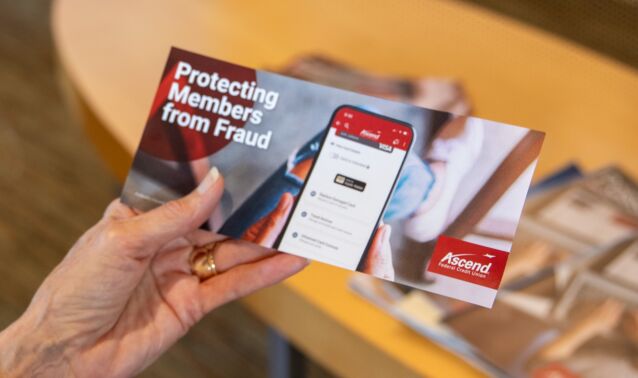
Ascend members have many tools at their disposal to help safeguard their information and stay informed about any account issues, including:
- Card controls to block or unblock your cards from your mobile device
- Automated account and fraud alerts to keep you informed
- Travel notices to keep your cards working smoothly while abroad
- Credit monitoring with real-time access to your latest score and report
We also offer a free fraud prevention module in our online financial education center for a quick refresher on spotting scams and how to avoid becoming a victim. Find this module and more at ascend.org/financial-education.
If you ever receive a call or message that appears to be from Ascend but you’re unsure whether it’s legitimate, call 800-342-3086 to confirm its validity. Do not call the phone number listed in the message or reply.
By staying aware of ongoing threats and using the right tools to protect your information, you can stay one step ahead of criminals. Learn more fraud prevention tips at ascend.org/fraud.
Federally insured by NCUA.